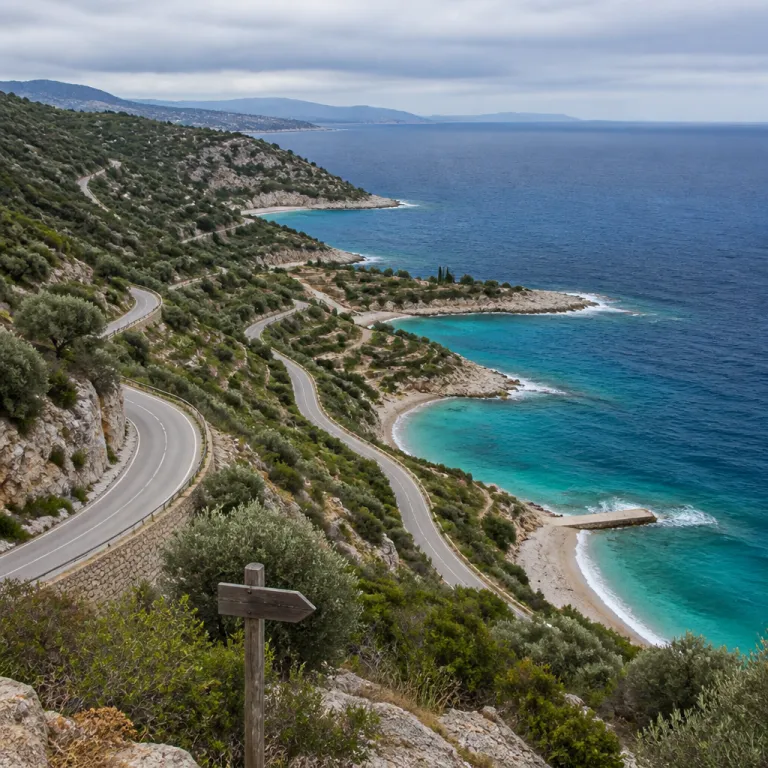
Why a Peloponnese road trip in July suits luxury‑minded families
A Peloponnese road trip in summer offers something Greek islands rarely manage for families. You move at your own pace along each coastal or mountain road, with a rental car full of beach toys, spare clothes and zero ferry stress. For parents used to juggling connections across Greece, that freedom quickly feels like the real luxury.
The region sits on the Peloponnese peninsula of mainland Greece, roughly a two to two and a half hour drive from Athens to Nafplio and closer to three to three and a half hours from Athens to Kalamata, yet it feels like a separate small country. You can shape a Peloponnese itinerary that links an ancient archaeological site in the morning with a calm beach by late afternoon, which keeps children engaged and adults genuinely inspired. This balance is why interest in road trip travel has risen sharply among premium families who want more than a single resort stay.
July brings heat, but the Peloponnese handles it better than many islands. Inland roads weave through gorges and pine shaded hills, so a mid day drive between one archaeological site and the next can be surprisingly comfortable. On the western coast, breezes are softer than the meltemi that whips the Cyclades, which makes a late afternoon swim at Voidokilia beach or any sheltered bay near Kalamata feel restorative rather than punishing.
For this kind of trip, a well chosen rental car is essential, not optional. Pick something with decent clearance for the narrower Mani road sections, strong air conditioning and enough boot space for multiple small suitcases plus a cooler of water and Kalamata olives. Car rental agencies at Athens and Kalamata airports are used to families planning a multi day trip itinerary, and they understand that one scratched surfboard, damaged stroller or missing child seat can derail the mood of an entire road trip.
Planning ahead matters as much as spontaneity. You will cover roughly 500 to 700 km over a week if you follow a classic Peloponnese road trip route that links Athens, Corinth, Nafplio, Mycenae, Kalamata and the Messinian coast, with daily legs of 80 to 150 km. That distance feels manageable when broken into a clear day itinerary, with no single driving stretch longer than two hours and every road segment ending at either a city with character or a beach with shade.
Luxury in this context is not only about the hotel room, although that matters. It is about how the entire trip flows, from the first glimpse of the Corinth Canal to the last swim at Voidokilia beach, without frantic packing for ferries or worrying whether a small island port will handle your rental car. Families who value calm transitions tend to find that a Peloponnese driving holiday delivers a smoother rhythm than island hopping, especially when children are still young.
The Argolid circuit: castles, amphitheatres and family friendly bays
The most accessible Peloponnese itinerary for first timers is the Argolid circuit. You leave Athens by rental car, cross the Corinth Canal after about 80 km and one toll of roughly €2.50, then follow a well maintained road towards the elegant city of Nafplio, another 60 km away. This loop works beautifully as a three day trip, with each day ending at a beach or a shaded square rather than a highway motel.
On day one, pause at the canal viewpoint to explain to children how this narrow cut changed travel across mainland Greece. Continue along the coastal road that hugs the Saronic Gulf, then roll into the town of Nafplio by early afternoon, when the light softens on its Venetian castle and neoclassical façades. Families who enjoy a sense of place should book a premium stay in the old city, such as a boutique hotel in a restored mansion with family suites and on site parking, then climb the Palamidi fortress in the cooler evening for sweeping views over the bay.
Day two belongs to the ancient world. Drive the short road from Nafplio to the archaeological site of Epidaurus, around 30 to 40 minutes and 30 km, where the theatre’s acoustics still impress even restless teenagers on a hot July day. After a shaded picnic, continue your day trip to the site of Mycenae, about 45 minutes from Epidaurus and 25 km from Nafplio, whose Lion Gate and royal tombs anchor any serious trip itinerary through ancient Greece.
Returning to Nafplio, reward everyone with a swim at a nearby beach such as Karathona, where the water stays shallow for a long time. Roadside tavernas between Nafplio and Epidaurus serve grilled fish, simple salads and plates of Kalamata olives that work well for children who graze rather than commit to a full course meal. This is where a Peloponnese summer road trip shines, because you can stop when hunger strikes instead of racing for a ferry departure.
On day three, keep things light. Stroll the small streets of the old city, then drive a short distance to Tolo beach for a final Argolid swim before heading back towards Athens or south to Kalamata, a drive of about 2.5 to 3 hours and 150 km via Tripoli with motorway tolls of roughly €10 to €15. If you are overnighting near the capital, the refined coastal properties on the Athenian Riviera, such as those featured in our guide to an elegant island style resort on the Athens coast, pair well with this circuit and ease the transition between road trip and flight home.
Families who prefer structure can work with local tour operators to add guided visits at each archaeological site. Methods range from private guides who meet you at the entrance to small group tours that last a couple of hours, which is usually the maximum attention span for younger children in the July heat. Whatever you choose, carry cash for tolls and small parking lots (often €3 to €5 per day), keep your maps or GPS devices updated or download offline maps, and confirm accommodation in Nafplio well ahead of peak summer weekends.
The Mani loop from Kalamata: stone towers, wild coves and Stoupa sands
The Mani loop feels like a different chapter of your Peloponnese road trip, even though it starts just south of Kalamata. Here the road narrows, villages cling to hillsides and stone tower houses rise above groves of silver green trees. It is dramatic, but still manageable for confident drivers with a well maintained rental car.
Begin in the city of Kalamata, which works as both a flight gateway and a relaxed first night stop. Stock up on local produce and Kalamata olives at the market, then set out along the coastal road towards Kardamyli, a small town about 35 km and 45 minutes away that has long attracted writers and low key aesthetes. This is where Patrick Leigh Fermor chose to build his Fermor house, now a cultural landmark that quietly anchors the area’s literary aura.
Families often base themselves in Kardamyli or nearby Stoupa for three or four days. Kardamyli’s waterfront tavernas are ideal for long lunches, while Stoupa beach offers soft sand and shallow water that suits younger children on a hot July day. From these bases, you can plan a flexible day itinerary that reaches Areopoli, Vathia and other stone built villages further south on the Peloponnese peninsula, with daily round trips of 120 to 160 km.
The Mani road between Kardamyli and Areopoli twists and climbs, so allow extra time and avoid driving this section after dark. The reward is a landscape of ancient tower houses, tiny chapels and sudden views down to hidden coves that feel far removed from the more polished city experience of Athens. For families, the key is to balance one ambitious day trip with a slower beach day, so children do not associate the word "road trip" with endless hours in the back seat.
Literary minded travelers may want to arrange a visit connected to Patrick Leigh Fermor, whose life in Greece still fascinates. The Fermor house near Kardamyli, once his home, embodies a certain understated luxury that resonates with guests who prefer authenticity over spectacle. Staying in a refined property nearby, such as a small villa with a pool or a seafront guesthouse that welcomes children, then reading Leigh Fermor’s work on a shaded terrace, can turn a simple Peloponnese summer itinerary into a quietly formative family memory.
When you loop back towards Kalamata, consider a final night in the city before continuing your trip towards the Messinian coast. Those who crave an urban fix might instead aim for a premium stay in central Athens, using our guide to luxury and premium hotels in the Psiri neighborhood to secure a base that works for both late night dining and early airport transfers. Either way, remember that some Mani roads are winding or steep, so build generous margins into your trip itinerary and avoid tight arrival times for flights or ferries.
Messinian coast and Voidokilia: where luxury resorts meet wild sand
The third strand of a Peloponnese family road trip runs along the Messinian coast, where high end resorts share the shoreline with sleepy fishing towns. From Kalamata, follow the coastal road west towards Pylos, then on to Costa Navarino and the legendary crescent of Voidokilia beach, a total of about 60 to 70 km and 1.5 hours of relaxed driving. This stretch suits families who want both polished service and a sense of unspoiled Greece.
Costa Navarino has become the flagship luxury destination on the Peloponnese peninsula, with properties that understand the needs of premium families. Kids’ clubs, shaded pools and structured activities mean parents can slip away for wine tasting or a spa treatment without guilt. For many, this is the ideal midpoint of a longer Peloponnese itinerary, a place to pause between archaeological site visits and more rugged road segments.
The "Voidokilia moment" is why many travelers choose this route in July. You park your rental car behind the dunes in a free sandy lot, walk a short path and suddenly the perfect horseshoe of Voidokilia beach opens in front of you, framed by a ruined castle on one side and a lagoon on the other. Despite its frequent appearance on best of lists, the beach can still feel surprisingly empty on a Tuesday, especially if you arrive early in the day.
Nearby Pylos and Methoni add depth to this coastal chapter of your trip. Children tend to love exploring the massive castle at Methoni, while adults appreciate the slow rhythm of the harbour and the chance to linger over grilled fish at a small taverna. Fish restaurants in Pylos are particularly good for long family lunches, when the July sun is too strong for another archaeological site or city stroll.
From here, you can either loop back to Kalamata or drive north towards Corinth and Athens, completing a broad circuit of mainland Greece. Some families choose to end their journey with a few nights on a quieter island, using our guide to where to stay in Folegandros as a calmer alternative to Santorini as a planning tool. Whatever your finale, remember that "Are the roads in the Peloponnese suitable for driving?" and the answer remains clear ; "Yes, but some areas have winding or steep sections."
For families who value both culture and comfort, this Messinian section completes the picture of a thoughtful Peloponnese road trip in summer. You will have moved from the Corinth Canal to Nafplio, from the site of Mycenae to the Fermor house, from Mani’s stone villages to the soft arc of Voidokilia beach. Along the way, you will have tested different styles of stay, from city hotels in Athens to coastal resorts, building a personal map of Greece that goes far beyond a single island postcard.
FAQ
What is the best time to visit the Peloponnese with children?
Spring and autumn offer pleasant weather and fewer crowds, which suits younger children who tire quickly in the heat. July can work well for a Peloponnese road trip in summer if you plan early starts, long lunch breaks in the shade and late afternoon swims, ideally avoiding midday driving on exposed stretches. Families who prefer cooler conditions should consider late May or late September for their trip.
How many days do I need for a Peloponnese road trip that ends at the beach?
A balanced trip itinerary needs at least seven days to link Athens, Corinth, Nafplio, Mycenae, Kalamata and the Messinian coast, with average daily driving of 80 to 150 km. With ten days, you can add the Mani loop and still enjoy unhurried beach time at Stoupa or Voidokilia beach. Anything shorter than five days risks turning the road trip into a sequence of rushed check ins and check outs.
Is a rental car essential for exploring the Peloponnese peninsula?
Yes, a rental car is the most practical way to explore the Peloponnese peninsula, especially for families. Public transport connects major cities and some towns, but it rarely aligns with a flexible day itinerary that includes both an archaeological site and a beach. Driving also allows spontaneous stops at roadside tavernas, viewpoints and small villages that would be hard to reach otherwise.
Are Peloponnese roads safe for drivers who are new to Greece?
Main highways and the primary Peloponnese road network are generally in good condition, with clear signage in Greek and English. Some sections in Mani and mountain areas are narrow or winding, so cautious driving and avoiding night travel on unfamiliar stretches are wise. Non EU drivers should remember that "Do I need an International Driving Permit in Greece?" has a simple answer ; "Yes, it's recommended for non-EU drivers."
How can I balance ancient sites and beach time on a family trip?
The key is to limit yourself to one major archaeological site per day, such as the site of Mycenae or Epidaurus, then promise a swim afterwards. Use a clear day itinerary so children know when the "serious" part of the day ends and the beach begins, and carry hats, high SPF sunscreen and plenty of water for exposed ruins. Over a week, this rhythm turns a Peloponnese road trip in summer into a sequence of manageable adventures rather than a forced march through history.
Sources
For further planning and on the ground updates, consult the official websites of the Greek National Tourism Organization, the Hellenic Ministry of Culture and the Automobile and Touring Club of Greece.