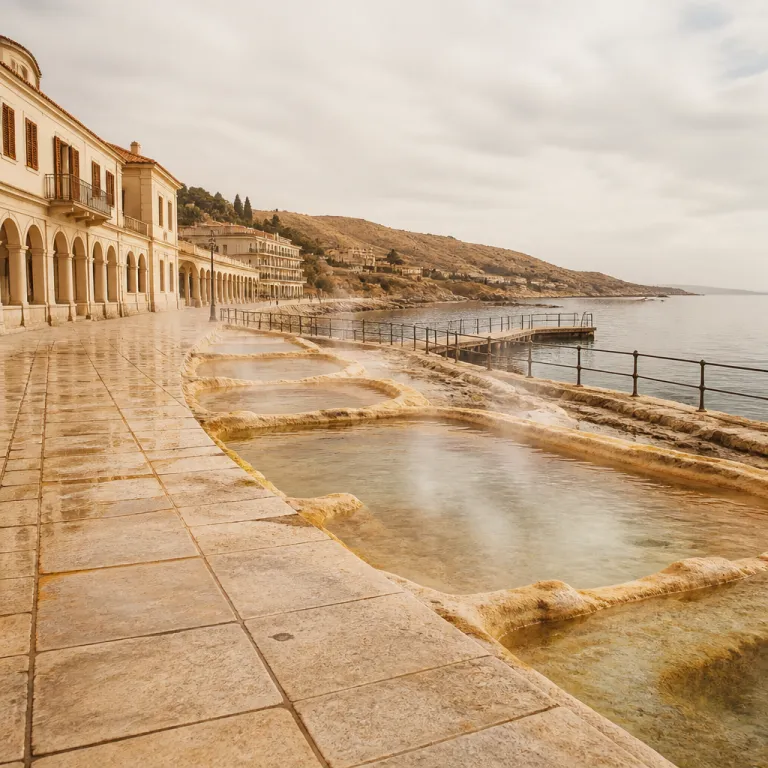
Thermal springs in Greece: why these forgotten towns matter
Thermal springs Greece luxury travel is not about another infinity pool. It is about stepping into a living hydrotherapy culture where hot mineral waters have shaped towns, rituals, and the very idea of wellness in Greece. For couples used to polished resort spas, these Greek hot springs offer a quieter form of luxury that feels both natural and deeply restorative.
Across Greece more than 750 natural springs have been recorded, according to the Hellenic Association of Municipalities with Thermal Springs, yet only a fraction appear on the typical holiday map. Many of these thermal baths in Greece sit in modest coastal towns or mountain valleys, where the focus remains on the quality of the water rather than on theatrical design. This is where thermal waters, mineral rich mud, and simple spa treatments still follow rhythms set long before modern wellness marketing.
In this context, thermal springs Greece luxury means choosing substance over spectacle. You trade a crowded resort spa for a wellness hotel built directly above a natural hot spring, where hot water rises from the seabed or hillside and flows straight into thermal pools. The result is a spa wellness experience that works on body mind balance, supported by long standing hydrotherapy traditions and contemporary spa wellness programs that feel rooted in place.
Edipsos and Thermae Sylla: the grand dame of Greek thermal spa culture
Edipsos on the island of Evia is often described as the spiritual capital of thermal springs Greece luxury. The town curves around a sheltered bay, where plumes of hot water bubble through the rocks and into the sea, perfuming the air with a faint mineral note. Since antiquity, people have travelled the winding national road and ferry routes here for hot springs that promise both relief and ritual.
Thermae Sylla Spa & Wellness Hotel anchors this thermal spa town with old world confidence. Built directly above a natural hot spring, the hotel channels mineral water into indoor and outdoor thermal pools, creating a circuit where hot mineral waters meet sea breezes and classical colonnades. The property is described in its official fact sheet as offering 105 rooms and suites, a scale that feels intimate enough for couples yet substantial enough to support serious spa treatments, medical consultations, and year round spa wellness programs.
Edipsos has long attracted a glamorous crowd, with local tourism archives and hotel history materials frequently citing visitors such as Aristotle Onassis, Maria Callas, Winston Churchill, Greta Garbo, and Omar Sharif. Today, Thermae Sylla is regularly mentioned by Condé Nast Traveler among notable European spa retreats, while references in the Michelin Guide underline its culinary ambitions. For a deeper dive into luxury spa hotels in Greece and how they compare with resort style properties, explore this guide to wellness sanctuaries for mind and body.
Inside Thermae Sylla and Edipsos: waters, treatments, and daily rhythm
Staying at Thermae Sylla means structuring your day around the water. Before breakfast, many guests slip quietly into the natural hot thermal pools, where thermal waters emerging at around 70 °C are cooled and blended to create a sequence of hot and warm zones, as outlined in the hotel’s spa information and technical notes. The sensation of moving from hot spring jets to cooler mineral water channels is both invigorating and meditative.
The Sylla spa complex combines classical hydrotherapy with contemporary spa treatments. You will find dedicated rooms for mud wraps using mineral rich clays, cabins for targeted spa wellness therapies, and a thermal spa wing focused on balneotherapy and hydro massage. Medical staff can design programs using hot mineral baths, inhalation therapies, and physiotherapy sessions, while more indulgent options pair thermal waters with aromatherapy or Greek island inspired body rituals.
Outside the hotel, Edipsos itself is a working thermal town rather than a stage set. Along the seafront road, natural hot water seeps through rocks into the sea, creating informal hot springs where local people bathe at sunrise and sunset. Cafés and tavernas cluster around the main area near the port, and the national road that threads across Evia makes it easy to combine Edipsos with a wider road trip or a post soak escape to a quieter Greek island via nearby ferry connections.
Loutraki and Kamena Vourla: modernizing Greece’s thermal heritage
While Edipsos leans into its grand spa town past, Loutraki and Kamena Vourla represent the new face of thermal springs Greece luxury. Both sit on the mainland along key national road corridors, making them easy weekend escapes from Athens for couples who want wellness without a long transfer. Driving times are typically 1–1.5 hours to Loutraki and around two hours to Kamena Vourla, depending on traffic and tolls, which makes them practical add ons to a wider mainland or island itinerary.
Loutraki’s thermal spa complex has been modernized with clean lined architecture, glass, and light filled thermal pools. Inside, spa treatments range from classic hydrotherapy circuits using thermal waters to more experiential spa wellness journeys that combine hot mineral baths with massage, facials, and body mind workshops. The focus is less medical than in the past, yet the natural hot spring water remains the quiet star, feeding pools, showers, and inhalation rooms with mineral rich flows.
Kamena Vourla, framed by mountains and sea, offers a softer, resort like interpretation of thermal springs. Hotels here often integrate thermal waters into private pools, shared spa areas, and dedicated wellness hotel wings, allowing guests to move between hot water immersion, sea swimming, and coastal walks. For travelers interested in how Greek spa culture extends to the islands, the Ionian coast offers another layer of hydrotherapy heritage, explored in depth in this feature on the Ionian spa circuit from Corfu to Paxos.
Planning your thermal springs itinerary: routes, pairings, and practicalities
Designing a thermal springs Greece luxury itinerary starts with the map. Edipsos lies on Evia, reached either by the bridge at Chalkida and a scenic national road drive or by ferry from Arkitsa, while Loutraki and Kamena Vourla sit directly on the main road arteries north of Athens. This makes it easy to build a loop that links multiple hot springs areas with coastal stays and at least one Greek island extension.
One elegant route begins with a night in Athens, then follows the national road to Loutraki for a first immersion in thermal spa culture. From there, continue along the coast to Kamena Vourla for a softer resort style take on hot mineral waters, before crossing to Evia and Edipsos for the full Thermae Sylla experience. Many couples then add a ferry hop to a nearby Greek island or connect onward to a Cycladic escape, using guides such as this curated piece on planning an unforgettable Mykonos honeymoon in refined Greek luxury as inspiration.
Whichever route you choose, think in terms of rhythm rather than checklist. Alternate days focused on structured spa treatments and thermal pools with slower days that prioritize local food, coastal walks, and unhurried swims in cooler waters. Visit during off peak seasons, book spa treatments in advance, and check current ferry timetables and road conditions so you experience these thermal towns as living communities rather than just wellness backdrops.
| Destination | Typical travel time from Athens | How to get there | Seasonal notes |
|---|---|---|---|
| Loutraki | 1–1.5 hours by car | National road via Corinth | Year round; busiest in summer weekends |
| Kamena Vourla | About 2 hours by car | Main highway toward Lamia | Most hotels open March–November |
| Edipsos | Approx. 3 hours total | Drive via Chalkida or ferry from Arkitsa | Thermal facilities often operate all year |
How Greek thermal towns redefine luxury for couples
For couples used to polished resort settings, thermal springs Greece luxury can feel disarmingly authentic. The emphasis shifts from design statements to the character of the water, the pace of the day, and the quiet intimacy of shared rituals. Instead of chasing sunset photos, you find yourselves timing a final hot spring soak to the sound of fishing boats returning to port.
In Edipsos, Loutraki, and Kamena Vourla, wellness hotel experiences are anchored in thermal waters that have drawn people for centuries. The spa wellness menus may feature contemporary language, yet the core remains simple: hot water, mineral rich springs, and treatments that respect the body mind connection. This is luxury measured not in spectacle but in how deeply rested you feel when you leave.
As Greek tourism planners reposition thermal baths from a purely medical model toward a lifestyle approach, these towns are poised to become essential stops for travelers who value meaning over marketing. They sit comfortably alongside more familiar Greek island escapes, offering a counterpoint to the usual resort spa culture. In a country where the taverna table, the afternoon nap, and the sea swim are already small acts of wellness, taking the waters feels like the most Greek luxury of all.
FAQ
What are the health benefits of Edipsos thermal waters?
Edipsos thermal waters are widely believed to aid in treating arthritis and rheumatism, a use reflected in information from the Greek National Tourism Organization and local spa clinics. These effects are linked to the mineral rich composition of the thermal waters and the controlled use of hot mineral baths under professional guidance.
How can I reach Edipsos from Athens?
You can reach Edipsos from Athens either by ferry from Arkitsa or by road from Chalkis. Many travelers choose to drive across the Chalkida bridge on the national road, then continue north through Evia to combine coastal scenery with easy access to the thermal springs area; the journey usually takes around three hours in total, including short stops.
Are there modern spa facilities in Loutraki?
Yes, Loutraki Thermal Spa offers various treatments in modern facilities. Visitors will find updated thermal pools, hydrotherapy circuits, and spa treatments that blend traditional use of hot spring water with contemporary wellness programs, as outlined in the spa’s official brochures and municipal tourism materials.
Is it possible to visit Greek thermal towns year round?
Many Greek thermal towns operate year round, especially Edipsos, Loutraki, and Kamena Vourla. Cooler months are ideal for long sessions in hot water, while spring and autumn allow you to combine thermal spa rituals with outdoor activities and coastal walks, with most hotels publishing seasonal opening dates and maintenance periods on their booking pages.
How do thermal spa towns differ from standard resort spas in Greece?
Thermal spa towns in Greece are built around natural hot springs and mineral water sources, with hotels and spa wellness facilities designed to use these thermal waters directly. Standard resort spas may offer excellent treatments and pools, but they usually rely on heated tap water rather than genuine hot spring or hot mineral flows, which is why Greek hot springs destinations feel distinct.
Trusted references
Hellenic Association of Municipalities with Thermal Springs (thermal spring statistics)
Greek National Tourism Organization (general information on Greek thermal baths)
Thermae Sylla Spa & Wellness Hotel official fact sheet (room count, water temperature, spa facilities)
Municipality of Edipsos and local tourism office archives (historical visitor references)
Condé Nast Traveler and Michelin Guide (recognition of Thermae Sylla and local gastronomy)