The island calendar: understanding Greek island food seasons
On the Greek islands, the real luxury is eating with the calendar. Seasonal rhythms shape what appears on every plate, from simple vegetables to elaborate seafood dishes that define family holidays. When you plan a stay in Greece around this quiet rhythm, you give your children a living lesson in taste, place, and time.
Local farmers and fishermen on islands such as Crete, Naxos, and Paros work with the same seasonal logic that guides serious Greek cuisine in Athens or Thessaloniki. The average annual temperature on many islands sits around 18 °C, which allows a long growing season for fruits, vegetables, wild greens, and olives that feed both seaside tavernas and luxury hotel kitchens. As chef Giorgos Stylianoudakis from Crete likes to say in interviews, “the calendar is our first ingredient” — these food seasons are not a trend but a structure, and the best properties respect that structure instead of flying in anonymous produce.
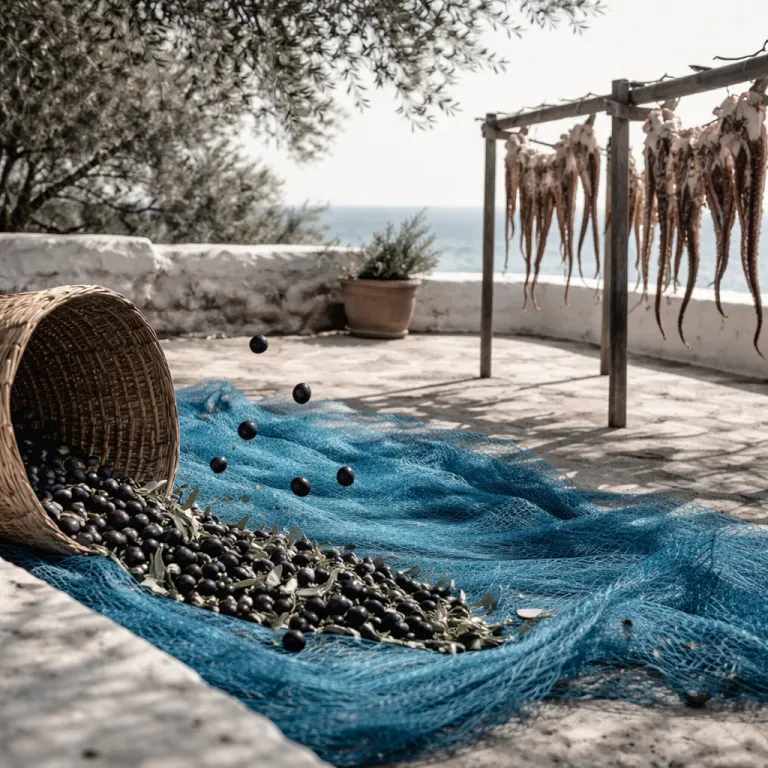
Spring brings artichokes, tender green beans, and the first wild greens that Greeks sauté gently in olive oil with onions, garlic, and a splash of vinegar. By early summer, tomatoes, cucumbers, and other fruits and vegetables flood farmers’ markets such as the Saturday market in Chania on Crete, and every salad, stuffed vegetable dish, and tomato sauce tastes brighter. Autumn is for grape leaves, rice stuffing baked in the oven, and the olive harvest that produces the extra-virgin olive oil you will drizzle over almost every dish, often celebrated in small village festivals from late October into November.
From port taverna to hotel table: how seasons shape Greek food
Walk any harbour in the Greek islands on a still afternoon and you will see octopus drying on lines, a quiet sign of the seasonal cycle at work. That same octopus will reach your plate later, grilled and brushed with olive oil, served beside a simple salad of tomato, cucumber, and wild greens that shows how islanders eat when the sea is generous. The port taverna ritual runs from spring to late autumn, and luxury hotels that understand Greek cuisine often send families there rather than keep them captive at the pool bar.
Traditional Greek cooking is built on vegetables, beans, fruits, and grains, which makes it naturally aligned with the Mediterranean diet that nutritionists praise. As chef Lefteris Lazarou has noted in interviews, the best Greek food is seasonal and local, with fine-dining kitchens formalising what taverna cooks and grandmothers have been doing for generations. When you see a menu of vegetable dishes that change every few weeks, from oven-roasted green beans in tomato sauce to black-eyed beans with wild greens, you are seeing Greek island food seasons translated into daily practice.
Some of the most interesting hotel restaurants now collaborate closely with tavern owners and local chefs who lead the Greek “gastro taverna” movement, where elevated island food still respects the farmers’ markets. Reading about this movement on an insider guide to the Greek gastro taverna scene helps you choose properties that value producers over plating tricks. For example, several boutique hotels on Crete and Naxos now list the island farmers who grow their fruits and vegetables, the fishermen who supply their seafood, and even the olive mills that press their Koroneiki or Athinolia olives, giving you confidence that the food will express both place and season.
Family friendly ways to taste the seasons on the Greek islands
For families, Greek island food seasons become a playful framework for planning days around markets, fields, and kitchens. Children who might ignore vegetables at home often eat them happily when they have picked green beans themselves or rolled grape leaves around fragrant rice stuffing. The best luxury hotels in Greece now curate these experiences with the same care they give to pool design or spa menus.
Look for properties that offer guided visits to farmers’ markets in nearby towns, such as the municipal market in Chania or the open-air stalls in Naxos Town, where your family can see how fruits, vegetables, wild greens, and beans shift from month to month. A good guide will explain why certain vegetable dishes appear only in spring, why tomato salad tastes different in August, and how olive oil from the latest harvest feels on the tongue. Many hotels then bring guests back to the kitchen for a relaxed cooking class where children help prepare a simple Greek dish, such as oven-roasted vegetables with onions, garlic, and tomato sauce, often finishing with a tasting of different local olives.
Other family friendly options include olive oil tastings that compare early-harvest extra-virgin oil with milder, later-pressed oils, or visits to small farms where kids can walk through green fields and taste fruits straight from the trees. Some island estates invite families to forage for wild greens in winter and early spring, teaching them how Greeks eat from the land even when the sea is rough. References to platforms such as mygreecestay.com are for illustration only, but when you see these activities listed alongside wellness offerings such as island spa rituals, often highlighted in guides to luxury spa hotels in Greece, you know the property takes a holistic view of food, health, and place.
Choosing luxury hotels that truly honour Greek island food seasons
Not every five-star property on the Greek islands takes seasonal eating seriously, so you need to read between the lines. When a hotel speaks vaguely about “Mediterranean cuisine” but offers strawberries in winter and asparagus in high summer, it is ignoring the local rhythm that defines authentic Greek food. By contrast, a serious property will talk clearly about its relationships with island farmers, local fishermen, and the tavern owners who prepare traditional dishes nearby.
Use a simple checklist when you study menus before you book and look for clear signs of seasonality in the vegetable dishes and salads. In spring, you should see artichokes, peas, and wild greens, often braised slowly in olive oil with lemon rather than hidden under heavy sauce. In high summer, expect tomato salad that tastes of the sun, fruits and vegetables served almost raw with only oil, vinegar, and sea salt, and simple dishes of green beans or black-eyed beans that let the produce speak.
Ask how the kitchen uses olive oil and whether they work with specific groves on the island for their extra-virgin supply. A thoughtful chef will explain how different oils pair with grilled fish, stuffed vegetables, or oven-roasted potatoes, and why certain oils are better for salad while others suit slow-cooked tomato sauce. When a hotel can speak with this level of detail about Greek cuisine, from grape leaves to rice stuffing and seasonal fruits, you can be confident that Greek island food seasons are guiding every plate.
Planning your family trip around the Greek island food year
Thinking about Greek island food seasons as a calendar helps families choose when to travel and where to stay. Spring from March to May is ideal if you love greens, beans, and lighter vegetable dishes, because fields are full of wild greens and markets overflow with fresh produce. Summer from June to September suits families who want tomatoes, fruits, and long evenings at seaside tavernas where children can eat grilled fish, salad, and simple Greek dishes until late.
Autumn on the Greek islands, especially October and November, is the moment for the olive harvest and for slow cooking. This is when you will taste new-season olive oil on bread, oven-roasted vegetables in rich tomato sauce, and grape leaves filled with warm rice stuffing that feels perfect after a day of swimming. Winter is quieter but still rewarding, with preserved fruits, beans, and wild greens sustaining traditional home-style cooking, and hotel chefs turning to hearty soups and baked dishes that show another side of Greek cuisine.
When you plan through a specialist platform such as mygreecestay.com, used here as an example of a curated booking service, you can filter for properties that highlight seasonal menus, access to farmers’ markets, and family friendly food activities. Align your travel dates with the foods your family loves most, whether that means early-summer tomatoes, autumn olive oil, or spring wild greens. In doing so, you turn a simple holiday into a gentle education in Greek island food seasons, where every salad, every stuffed vegetable, and every drizzle of extra-virgin olive oil tells you exactly where you are in the year.
FAQ about Greek island food seasons and luxury stays
When is the best time to visit the Greek islands for food lovers?
Spring and summer offer abundant fresh produce, with vegetables, fruits, and wild greens at their peak on most islands. If you care about tomato salad, stuffed vegetables, and light dishes cooked in olive oil, late June to early September is ideal. For olive harvest experiences and richer oven-roasted dishes in tomato sauce, choose October or early November, when many villages on Crete, Lesvos, and the Peloponnese begin pressing new oil.
Are there good vegetarian options in Greek island hotels and tavernas?
Yes, many dishes feature vegetables and legumes, especially in traditional Greek home-style cooking. Look for menus with green beans in tomato sauce, black-eyed beans with wild greens, grape leaves filled with rice stuffing, and a wide range of salads built around seasonal fruits and vegetables. Luxury hotels that respect Greek island food seasons usually offer several vegetable dishes at every meal.
What are some popular Greek island dishes families should try?
Moussaka, souvlaki, and fresh seafood are widely loved, but families should also try simpler seasonal plates. These include tomato salad with extra-virgin olive oil, oven-roasted vegetables with onions and garlic, and slow-cooked beans that show the depth of Greek cuisine. Children often enjoy stuffed vegetables and grape leaves, especially when they have helped prepare them in a hotel cooking class.
How can I tell if a hotel really supports local producers?
Hotels that take Greek island food seasons seriously usually name their partner farmers, fishermen, and cheese makers on menus or websites. They often organise visits to farmers’ markets, olive groves, or small farms, and they adjust dishes as fruits and vegetables change through the year. If a property serves the same salads and vegetable dishes in every season, it is less likely to be working closely with local producers.
Is the Mediterranean diet easy to follow when staying in luxury hotels?
On the Greek islands, the Mediterranean diet is woven into everyday eating, especially where chefs respect seasonal produce. You will find plenty of vegetables, beans, fruits, olive oil, and grilled fish, alongside lighter salads dressed simply with oil, vinegar, and herbs. Choosing hotels that highlight traditional Greek cooking and seasonal menus makes it effortless to eat well while travelling.