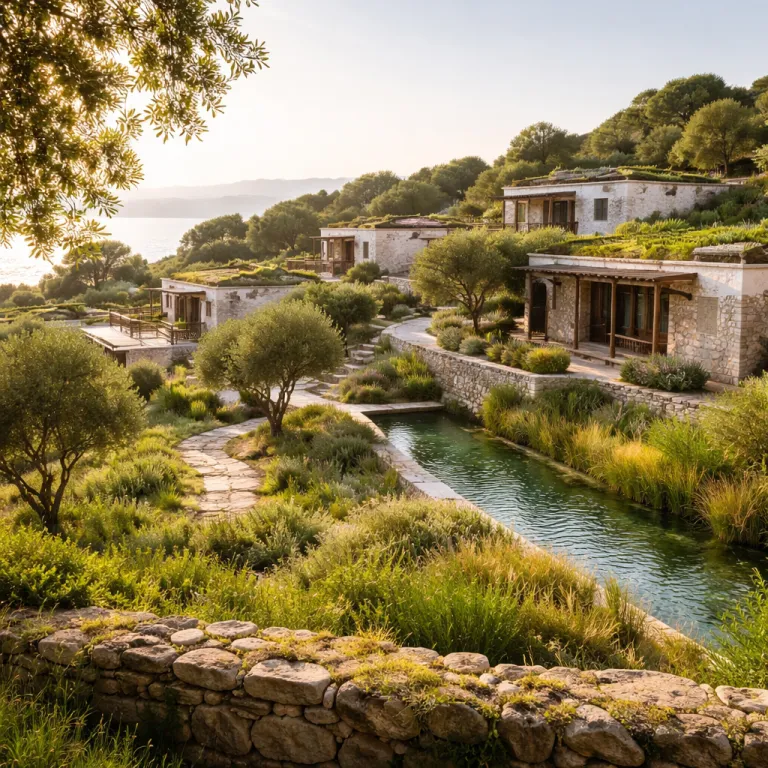
Sustainability as the new measure of Greek luxury
Sustainable luxury hotels in Greece have shifted from marketing flourish to hard metric at the Greek Hotel of the Year Awards, where sustainability criteria now sit beside design and service. Since the 2023 and 2024 editions, judges have been explicit that an eco-friendly label on a single property is not enough; they now examine how hotels manage water, energy, waste and staff welfare across entire estates in Athens, Crete, Mykonos and Santorini. For business travellers extending a stay, this shift means that choosing sustainable accommodation in Greece now directly shapes both the environmental impact of their trip and the quality of their on-the-ground experience.
What was measured at the awards went far beyond a green hotel sign or a vague promise of eco products in guest bathrooms. Panels looked for ISO 14001 or EMAS-verified systems, transparent privacy policy statements on data linked to environmental reporting, and evidence that each hotel or group of hotels in Greece had integrated sustainability into procurement, from organic farm produce to low-impact cleaning products. As one 2024 judge noted in the official Greek Hotel of the Year Awards commentary, “We reward hotels that can prove their impact, not just describe it,” a line recorded in the published jury notes for that year. The gap between glossy eco brochures and audited practice is narrowing, and properties that once leaned on the word boutique now need measurable performance to be taken seriously by corporate travel buyers.
Kinsterna Hotel in Monemvasia emerged as a benchmark because it treats its hillside estate as a working organic farm and living village rather than a static luxury backdrop. The team restored ancient water cisterns to irrigate vines and orchards, turning water management into a visible part of the guest experience while cutting reliance on external supply from across the Aegean Sea. Award documentation from the 2023 Greek Hotel of the Year Awards and Kinsterna’s own sustainability reports note that the property reduced mains-water consumption by roughly 40% over five years and expanded on-site organic cultivation, highlighting how regenerative farming, cultural preservation and operational integration were decisive factors, not optional extras for a single flagship property among the many hotels in Greece.
From eco marketing to verifiable operations
Across Greece, the language of eco and sustainable has become so common that travellers now need sharper tools to separate substance from spin. A hotel may promote eco-friendly villas with sea views and family-focused services, yet still rely on imported products and tanker water that undermine its environmental claims. The awards process underlined that only when sustainable hotels embed energy monitoring, waste audits and staff training into daily operations—often tracking kWh per guest night, litres of water per stay and annual staff-training hours—do they qualify as credible sustainable luxury hotels in Greece.
Groups such as Grecotel, Bluegr Hotels & Resorts, H Hotels Collection and Katikies Hotels have started publishing environmental data for individual properties, from the capital to Crete and the smaller islands. Their hotels increasingly feature solar panels, organic linens and partnerships with local organic farm suppliers, aligning with guidance from Greek tourism and hospitality associations that says: “How do luxury hotels implement sustainability? Through energy efficiency, local sourcing, and waste reduction.” Several properties now report year-on-year reductions in energy use of 10–20% and recycling rates above 60%, figures drawn from publicly available sustainability reports and Greek tourism trade briefings that give corporate travel managers concrete benchmarks.
On the islands, properties such as OKU Kos, Ekies Senses and Rocabella Mykonos show how design-led hotels can still function as green exemplars. OKU Kos operates as an adults-only retreat with low-rise villas that maximise natural ventilation, while Ekies Senses integrates its rooms into the surrounding pine forest and shoreline of the Aegean Sea. Rocabella Mykonos, Gundari Hotel on Folegandros and newer villas Santorini projects are investing in grey-water systems that reuse up to half of wastewater for irrigation, local stone construction that reduces embodied carbon, and eco-friendly products to ensure that both each villa and the wider cluster of villas remain aligned with the sustainable expectations of high-end travel clients.
What discerning business travellers should verify before booking
For executives turning meetings in Athens into short leisure breaks, the sustainability checklist now sits beside Wi-Fi speed and transfer times. Ask your assistant to read beyond the skip-content style marketing lines and request third-party certifications, water usage data and details on any on-site farm or organic farm that supplies the restaurant. If a hotel in Mykonos, Santorini or Crete claims to be family friendly or pet friendly, verify how it manages waste, noise and beach access so that both visiting families and the local environmental context benefit.
Regenerative leaders such as Kinsterna Hotel, Aristi Mountain Resort and Mediterraneo Ios show that farming, water and staff policies are the real load-bearing pillars of sustainable luxury hotels in Greece. They treat the surrounding village, the Aegean Sea and nearby farms as partners, not scenery, and they invest in training local teams so that environmental standards outlast any single general manager. Many now log more than 20 hours of sustainability training per employee each year, and publish brief impact reports summarising energy, water and community metrics, as noted in recent Greek hospitality award submissions and hotel sustainability statements. When planning where to stay in Mykonos, a curated overview of luxury stays in Mykonos can help you balance sea views, eco-friendly operations and access to quieter corners of the island.
Names such as Rooster Antiparos, Ekies Senses and OKU Kos have become shorthand for a quieter, more grounded form of luxury that still respects privacy and time-poor business travellers. These hotels and villas often sit just outside the main village, offering sea views, shaded terraces and easy access to local tavernas that prioritise seasonal products from nearby farms. For travellers who care about sustainable hotels as much as service, this is where Greece now excels: a place where a green hotel can feel both rigorously audited and deeply, effortlessly friendly.
Key figures on sustainable luxury hotels in Greece
- Approximately 30% of hotels in Greece now hold some form of sustainability certification, according to summaries from the Greek National Tourism Organisation and industry reports published between 2022 and 2024 that track the uptake of eco labels and environmental management systems.
- Eco-friendly hotel bookings in Greece increased by about 15% between 2024 and 2025, reflecting stronger demand for sustainable hotels among high-end travellers, based on aggregated booking platform data cited in Greek tourism press releases and trade briefings that analyse premium travel trends.
Essential questions about sustainable luxury hotels in Greece
What defines a sustainable luxury hotel?
A sustainable luxury hotel combines high-end amenities with verifiable eco-friendly practices, such as certified energy management, responsible water use, fair labour policies and meaningful support for local communities and culture, all documented through clear metrics and third-party audits that guests can review.
Are there eco-friendly luxury hotels in Greece?
Yes. From restored farm estates in the Peloponnese to contemporary beach resorts on the islands, many Greek luxury hotels now hold recognised sustainability certifications and publish data on their environmental and social performance, often including annual energy savings, water-efficiency figures and community-investment indicators drawn from independently reviewed reports.
Why choose sustainable luxury hotels?
Choosing sustainable luxury hotels allows travellers to enjoy comfort and attentive service while reducing their environmental footprint, supporting local producers and encouraging the wider Greek hospitality sector to invest in long-term, regenerative practices that can be tracked, reported and independently verified over time through transparent sustainability disclosures.