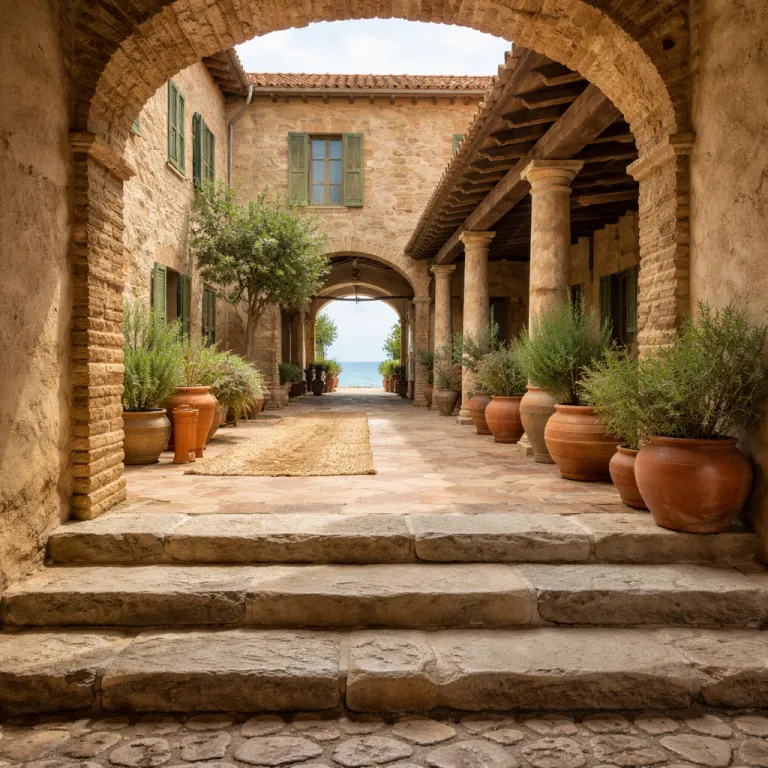
Heritage hotels in Greece where architecture leads the story
Architecturally driven heritage hotels in Greece are no longer side notes to island sunsets; they are the main reason many travelers book a room. While Santorini and Mykonos still dominate postcards, the most interesting architectural stories now unfold in stone mansions, Ottoman towers, and Venetian walls across the mainland and lesser known islands. If you care about architecture as much as a sea view, these historic properties and their carefully restored rooms will shape how you experience each city and landscape.
Across the country, characterful hotels occupy former palace wings, century old townhouses, and monastic complexes that once anchored the local community. The best stays respect original proportions and materials, then layer in contemporary design so that every room feels both grounded and quietly luxurious, rather than themed. When you check into these buildings, you are not just booking a bed for the night; you are entering a living archive of Greek social history, trade routes, and shifting borders.
Architects and hoteliers now treat the restoration of historic Greek properties as a discipline in its own right, balancing preservation with guest comfort. Official guidelines often dictate what can be altered in a city center or fortified settlement, while travelers expect generous rooms, refined dining, and sometimes a rooftop terrace with a compelling view. The tension between these forces is where the most creative spirit emerges, and where design driven accommodation in Greece quietly outplays more generic luxury hotels in larger European or Asian cities.
From Cycladic icons to mainland stonework: a new design map
For years, Cycladic white cubes defined the global image of a Greek hotel, helped by design led projects on Mykonos and Santorini that perfected minimalism. Recent work by practices such as Vilma Agrafioti Architects, Studio Bonarchi, Potiropoulos+Partners, Divercity Architects, and dePLOT Architects shows how Cycladic architecture can be revived with slow living principles and careful interior design. Yet the most compelling narratives in historic hospitality now lie beyond the caldera, in regions where stone, brick, and timber replace whitewash as the main language.
Understanding Cycladic architecture still matters, because many travelers compare every hotel in Greece to those white boxes with flat roofs and sea facing rooms. As one reference puts it, “What defines Cycladic architecture? Whitewashed walls, cubic shapes, flat roofs, minimalistic design.” When you read a guide best suited to architecture lovers, you will see how new restorations reinterpret these ideas in different materials, and why our in depth analysis of the modern Cycladic suite remains essential reading in any serious Cycladic suite decoded feature.
On Mykonos and Santorini, adaptive reuse projects often occupy twentieth century structures rather than medieval walls, so the design challenge is different from a 19th century convent in Epirus or a Venetian palace in Crete. Architects use traditional craftsmanship and eco friendly technologies to bring life back to tired hotels, while keeping the focus on proportion, light, and the relationship between each room and the surrounding city or sea. When you book these places through a specialist platform, you are choosing design as your favourite amenity, not an afterthought.
Mani towers and Monemvasia: defensive architecture turned intimate stays
Drive into the Mani peninsula and you enter a landscape where stone tower houses rise like sentinels above olive groves, many now reborn as intimate heritage hotels. These former defensive structures, with narrow windows and thick walls, once protected extended families; today their compact rooms and roof terraces offer a rare kind of privacy and a powerful view of the Taygetus mountains or the sea. The best hotels here keep the raw stone and austere silhouettes, then introduce warm interior design details such as built in daybeds, sculptural lighting, and discreet underfloor cooling.
In Monemvasia, the medieval rock city connected to the mainland by a narrow causeway, restoration projects work within a car free fortified grid that feels almost theatrical. Many small hotels occupy former merchants’ houses or palace like mansions, where arches, courtyards, and Byzantine stonework dictate how rooms are arranged and how guests move from city gate to sea facing rooftop. When you check into a hotel inside the walls, you trade easy access to the modern town for the pleasure of wandering alleys lit only by lanterns at night.
These Mani and Monemvasia properties show how thoughtful design can transform defensive architecture into deeply personal retreats without losing authenticity. Hoteliers collaborate with local artisans so that every room key, ceramic plate, and restaurant bar stool feels rooted in the community rather than imported from a catalog. For travelers used to polished stays in places like The Hoxton, Amsterdam or Warehouse Hotel in Singapore, the raw textures here feel radical yet refined, and they often become a favourite chapter in any Greek itinerary.
Zagori stone villages and the quiet power of Epirus
Far from the islands, the Zagori region in Epirus offers a different expression of Greek hospitality, anchored in slate roofs, stone bridges, and dense forests. The villages form part of the Zagori Cultural Landscape, which Greece has proposed for UNESCO World Heritage status, and many former mansions and inns have been brought to life again as small hotels with just a handful of rooms. Staying here feels less like checking into a resort and more like joining a mountain community that still follows its own rhythm.
Inside these restored houses, interior design tends to favor timber ceilings, thick wool textiles, and fireplaces that turn every room into a winter refuge. Hoteliers often position their restaurant bar as a social hub, serving slow cooked dishes that rival coastal gastronomy, while a few properties add small wellness corners rather than flashy rooftop pools. If you are used to the urban energy of Perianth Hotel in central Athens, a few nights in Zagori recalibrate your sense of what luxury means in a remote settlement that barely qualifies as a city at all.
Design led independents in Zagori compete less on size and more on narrative, which is where they quietly outshine some international brands from Amsterdam, the UK, or Singapore. They emphasize hiking routes, stone bridge walks, and village festivals, then weave these into their booking journey so that you book experiences alongside rooms. For travelers planning a wider Ionian and Epirus circuit, pairing a Zagori stay with the refined spa focused properties of Corfu and Paxos, as explored in our Ionian spa circuit feature, creates a satisfying contrast between mountain austerity and coastal ease.
Urban heritage: Athens, Corfu, and the new language of Greek luxury
Athens has become a laboratory for urban heritage hotels, where neoclassical façades hide contemporary interiors and rooftop terraces frame the Acropolis. Properties such as Perianth Hotel in the historic center show how a hotel in Athens Greece can honor mid century architecture while embracing bold interior design and a lively restaurant bar scene. When you book a room here, you are choosing to stay in the city center where galleries, ambitious restaurants, and nightlife unfold within a few minutes’ walk.
Across the Ionian Sea, Conrad Corfu has taken a different path, using terracotta and stone to anchor a large scale resort in the landscape while commissioning Greek artists and designers like Sophie Deloudi to shape its visual language. This approach aligns with the broader movement in Greek hotel design, where international brands learn from independent properties that treat art programs and community engagement as core elements rather than add ons. Guests who might usually gravitate to a canal side hotel in Amsterdam, a townhouse in York, or a design forward hotel in Singapore often find that Corfu’s layered history and coastal light change how they think about resort architecture.
Comparisons with properties such as Warehouse Hotel in Singapore or a carefully restored century convent turned hotel in continental Europe help clarify what makes Greek heritage hotels distinct. Here, the creative spirit comes from the tension between archaeological oversight, local expectations, and the practical needs of modern booking platforms that must show clear photos of rooms, rooftop spaces, and restaurants bar offerings. When you check availability on a curated site, you are not just scanning for the best hotels; you are reading a design guide best suited to travelers who treat architecture as their favourite travel companion.
How to book heritage design hotels in Greece with confidence
Choosing between heritage hotels in Greece can feel daunting, especially when each property promises a unique design story and only a limited number of rooms. Start by deciding whether you want an urban stay in Athens Greece, a fortified city like Monemvasia, a mountain village in Zagori, or a coastal palace style resort in the Ionian islands. Once you know your preferred city or region, you can check maps, distances, and transfer times so that late night arrivals do not turn into logistical puzzles.
When evaluating historic Greek hotels online, look closely at floor plans, room descriptions, and photography that shows both public areas and private spaces. A thoughtful hotel will present its rooftop, restaurant bar, and city center access with the same care as its suites, making it easier to book the right room type for your style of travel. Pay attention to how each place talks about its community partnerships, whether through local artisans, cultural events, or restaurants that highlight regional produce.
Finally, compare heritage properties in Greece with design forward hotels you may know in other cities, such as a favourite canal house in Amsterdam, a characterful address in York, or a riverfront hotel in Singapore. This mental benchmark helps you understand where Greek hotels lean more rustic, where they match international standards, and where they surpass them through setting and narrative. Use specialist booking platforms that curate only the best hotels, provide honest context, and treat each listing as part of a living design guide best suited to architecture conscious travelers rather than a generic inventory.
FAQ
What defines Cycladic architecture and why does it matter for hotel design in Greece ?
Cycladic architecture is characterized by whitewashed walls, cubic volumes, flat roofs, and minimal ornamentation that responds to harsh island light and wind. As one reference explains, “What defines Cycladic architecture? Whitewashed walls, cubic shapes, flat roofs, minimalistic design.” Even when you stay in a stone built heritage hotel on the mainland, architects often reference this clarity of form and light handling, which is why understanding Cycladic principles helps you read the design language of many hotels across Greece.
Why are heritage hotels popular in Greece among design conscious travelers ?
Heritage hotels in Greece appeal to design conscious travelers because they combine authentic architecture with contemporary comfort in a way that feels specific to each region. Many properties occupy former mansions, tower houses, or monastic buildings, so every room tells a story about trade, defense, or religious life. For guests used to standardized international hotels, this sense of place, combined with thoughtful interior design and strong gastronomy, creates a richer and more memorable stay.
How do restored heritage hotels impact local communities in Greece ?
Restored heritage hotels often act as economic and cultural anchors in smaller towns and villages. They create year round employment, support local artisans through furniture and ceramics commissions, and attract visitors who spend money in nearby tavernas, cafés, and shops. As one reference notes, “They boost local economies and preserve cultural heritage,” which is particularly visible in regions like Zagori, Mani, and Monemvasia where alternative industries are limited.
Are heritage design hotels in Greece generally eco friendly ?
Many heritage design hotels in Greece incorporate eco friendly practices, although the level of sustainability varies by property and region. Reusing existing buildings already reduces construction impact, and architects often specify local stone, timber, and lime based plasters that age well and require less replacement. A growing number of hotels also invest in energy efficient systems, water saving fixtures, and low impact heating or cooling, aligning heritage preservation with contemporary environmental expectations.
How far in advance should I book heritage hotels in Greece during peak season ?
Because many heritage hotels have a small number of rooms, they can sell out quickly during peak months, especially in destinations like Monemvasia, Mani, and popular Athens neighborhoods. For high demand periods, booking three to six months ahead is prudent, while shoulder season stays may allow more flexibility. If a particular room type or rooftop suite is your favourite choice, treat it like a limited ticket and check availability as early as your travel dates are fixed.