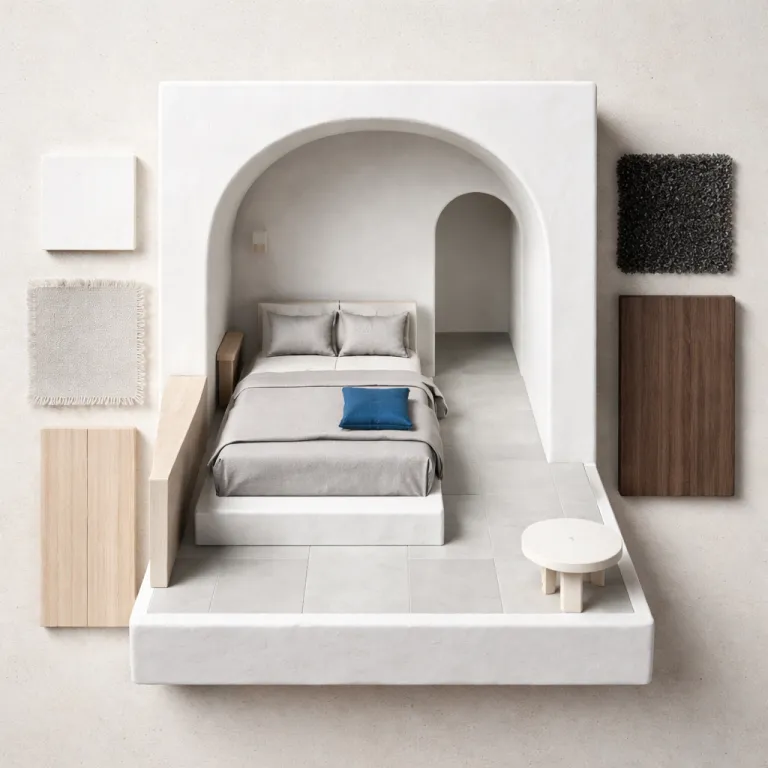
The Cycladic suite as a climate machine, not a postcard
On the Cyclades islands, what many guests read as pure décor began as survival engineering. The foundations of cycladic hotel architecture lie in houses built to resist wind, sun and earthquakes while using minimal materials from each island. When you check into hotels across Santorini Cyclades or quieter Sifnos, you are stepping into a design language that once had nothing to do with luxury and everything to do with staying cool, dry and safe.
Traditional cycladic architecture used thick stone walls, flat roofs and compact volumes to reduce exposure to the Aegean gusts. Those same load bearing walls now frame your hotel accommodation, while whitewashed walls bounce light away and keep interiors several degrees cooler than the outside air. Cyclades architecture also relied on small, deep set windows doors to control glare and heat, a strategy that contemporary hotels reinterpret with larger openings but similar depth to maintain a strong connection with the surroundings.
The typical Cycladic house clustered around a courtyard that acted as an outdoor living room and a working space. Many luxury hotels in the Cyclades islands now add private plunge pools or shaded patios where cisterns and outdoor kitchens once stood, translating vernacular logic into contemporary comfort. When you evaluate a hotel design on an island, check how the architecture channels wind, filters light and frames the blue Aegean view, because that is where authentic cycladic hotel architecture still does its best work.
From village house to suite: what is authentic and what is cosmetic
Modern cycladic hotel architecture keeps the cubic silhouettes and whitewashed walls that travellers expect, yet many deeper vernacular elements quietly disappeared. The original Cycladic house used flat roofs as working terraces, with parapets protecting residents from the wind while they dried figs or mended nets. In many hotels you will find those roofs transformed into sunset decks with loungers, but the structural logic and the relationship to the Aegean sky remain intact.
What often gets lost in translation is the courtyard, the cistern and the outdoor kitchen that once organised daily life. Instead, design led properties add infinity pools, spa suites and elaborate restaurant offers, sometimes without a clear connection with the surroundings or the island’s water scarcity. When you compare hotels on Santorini or Sifnos, look for projects that retain layered outdoor spaces and shaded passages rather than only a single exposed terrace facing the island Santorini caldera.
Another modern graft is the generous glazing that many guests love for the uninterrupted view of the blue sea. Traditional cycladic architecture relied on smaller openings for structural and climatic reasons, so when you see full height windows doors, you are looking at a contemporary intervention that must be carefully engineered. The most successful hotels balance these large panes with deep reveals, shutters and screens, preserving the sculpted feel of typical Cycladic forms while delivering the light filled interiors that luxury travellers expect.
How to read a Cycladic suite like a design critic
Approaching cycladic hotel architecture with a critical eye turns every check in into a quiet masterclass. Start with ceiling height and volume, because traditional houses in the Cyclades islands used modest heights to conserve heat in winter and coolness in summer. When a hotel dramatically raises ceilings without adding shading or cross ventilation, the result may look impressive yet feel acoustically harsh and thermally inefficient.
Next, study window depth and orientation, which are central to both cycladic architecture and guest comfort. Deeply recessed windows doors cut glare, frame the Aegean view and create a threshold where interior design, light and shadow meet in a very tactile way. If your suite on Santorini Cyclades or Sifnos has shallow frames and no shading, you will find yourself relying on blinds and air conditioning instead of enjoying the natural beauty that good design can modulate.
Finally, look at how water features are sited, because pools in hotels echo the old cisterns that once collected scarce rainwater on each island. A pool pressed against whitewashed walls and sheltered from the wind will feel calm and private, while one perched on an exposed edge may photograph well but offer less usable hospitality space. Reading these details helps you choose the perfect place for a work and leisure stay, especially when you compare a curated collection of properties on a specialist platform such as My Greece Stay, where you will find in depth reviews and a focus on design integrity.
Studios and signatures shaping contemporary Cycladic luxury
The most compelling cycladic hotel architecture today comes from studios that treat the islands as living landscapes rather than empty backdrops. ATENO’s work on the Olen Syros hotel threads new volumes into the natural cliff, allowing the architecture to recede so the Aegean and the island topography lead the experience. GM Architects, behind Deos Mykonos, use terraced forms and earthy textures to soften the transition between built spaces and the rocky Cyclades islands terrain.
Another key player is 314 Architecture Studio, whose Meta Memories resort blends ancient Cycladic elements with a crisp modern design language. Their projects show how cyclades architecture can evolve without losing its structural honesty, using local stone, lime plaster and carefully calibrated openings. These architects share methods such as integrating buildings into the slope, using traditional construction techniques and collaborating with local artisans, which strengthens both hospitality quality and cultural continuity.
Across this emerging collection of hotels, you will find recurring themes that matter to discerning travellers. Interior design tends to favour natural materials, sculpted built in furniture and a restrained palette that lets the blue sea and sky dominate. As one reference succinctly states, “Cycladic architecture is characterized by whitewashed cubic structures, flat roofs, and minimalistic design.”, and the best hotels use this clarity as a framework for innovation rather than a marketing costume.
Why this architectural literacy matters for business leisure travellers
For executives extending a work trip, understanding cycladic hotel architecture is not an academic exercise, it is a tool for better bookings. Good design directly affects sleep quality, focus and recovery, especially when you move between meetings, flights and ferries across multiple destinations. A suite with thick walls, shaded outdoor space and a calm connection with the surroundings will feel restorative in a way that a purely cosmetic white cube never can.
When you evaluate hotels on Santorini, Sifnos or other Cyclades islands, look beyond the first blue and white photograph. Check whether the hotel accommodation layout allows for quiet work, whether the windows doors are positioned to avoid glare on your laptop and whether the interior design uses natural materials that age gracefully. Properties that respect cycladic architecture principles usually also invest in thoughtful hospitality, from discreet service to restaurant offers that reflect local produce rather than generic menus.
Platforms such as My Greece Stay curate a collection of luxury hotels across Greece, highlighting design forward properties that balance authenticity and comfort, and their guide to romantic escapes and the finest luxury hotels in Greece for couples is a useful benchmark for spatial quality. When you subscribe to a newsletter from such a specialist site, you add a quiet layer of intelligence to your travel planning, far beyond simple price comparison. Always review the privacy policy, note the Greece tel contact details and the rights reserved statement, then subscribe newsletter options only where the editorial voice shows real architectural literacy rather than just glossy imagery.
FAQ
What defines authentic Cycladic architecture in a hotel setting ?
Authentic cycladic architecture in hotels is defined by cubic volumes, whitewashed walls, flat roofs and deep set openings that respond to the Aegean climate. Look for thick walls, shaded outdoor areas and a strong connection with the surroundings rather than only cosmetic blue accents. When these elements are present, cycladic hotel architecture feels both timeless and quietly efficient.
How do modern hotels blend Cycladic design with contemporary comfort ?
Modern hotels blend cycladic design with contemporary comfort by keeping the structural logic while updating amenities. They may add pools where cisterns once stood, expand windows doors for better views and refine interior design with natural materials and integrated lighting. The best examples maintain the spatial hierarchy of courtyards, terraces and roofs so the architecture still mediates wind, sun and privacy.
Why is Cycladic architecture significant for luxury travellers ?
Cycladic architecture is significant because it shapes how you experience light, temperature and privacy during your stay. Its minimal forms and careful siting create calm, legible spaces that suit both leisure and focused work. For luxury travellers, this means suites that feel composed and restorative rather than simply large or expensive.
How can I assess Cycladic hotel architecture before booking ?
You can assess cycladic hotel architecture by studying floor plans, photographs and section drawings when available. Pay attention to ceiling heights, window depth, outdoor shading and how the building sits on the island landscape. Reviews from design focused platforms such as My Greece Stay often highlight these aspects, helping you select hotels where architecture and hospitality are aligned.
Do all Cycladic islands offer the same architectural experience ?
Not all Cycladic islands offer the same architectural experience, even if they share a common language of forms. Santorini, Sifnos and other destinations each adapt cycladic architecture to their specific topography, materials and tourism patterns. Exploring several islands over time reveals a nuanced collection of interpretations, from cliff hugging suites to low slung houses set back from the Aegean shore.