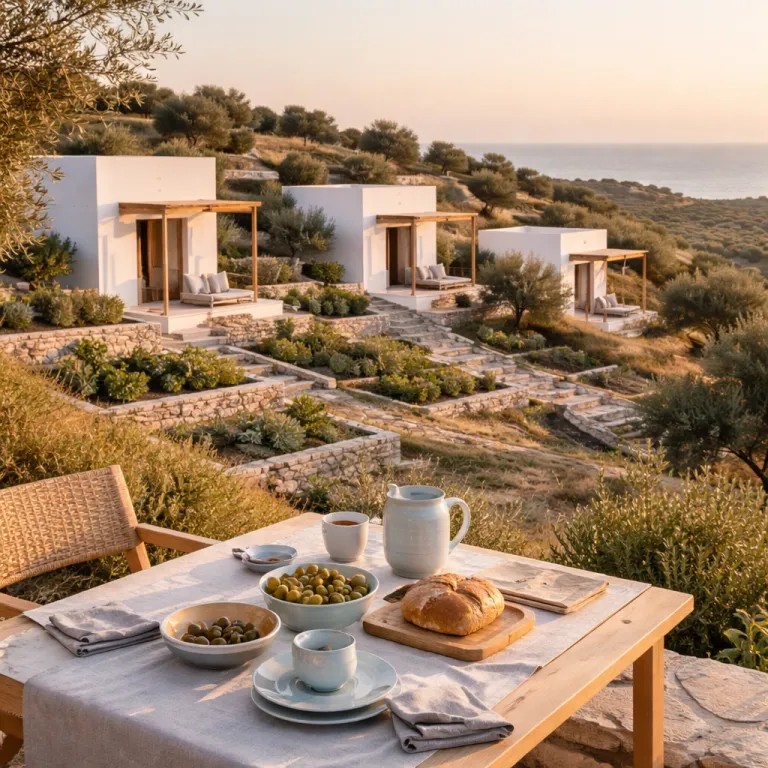
Why a Peloponnese luxury farm stay rewards a slower itinerary
A peloponnese luxury farm stay makes sense when you treat the region as a living system rather than a checklist. The peninsula stretches from the western Ionian coast to the Argolic Gulf, and that distance holds layers of farm culture, stone villages, and sea facing towns that unfold best over several nights instead of a rushed weekend. In this part of Greece, nature, food, and people are tightly woven, so luxury becomes less about marble lobbies and more about how a hotel connects you to the land.
Compared with the islands, the peloponnese offers a quieter rhythm and more varied landscapes for guests who want depth. You can wake on an organic farm among olive trees, spend the day at a remote beach, then return to a stone built retreat where dinner is drawn from the same olive grove you walked through at dawn. That kind of country living suits business leisure travelers who need reliable Wi Fi and a good pool but also want to feel that every night adds meaning, not just another high rating on a website.
The region’s best hotels peloponnese now operate as working estates rather than isolated resorts. Properties such as Eumelia Organic Agrotourism Farm & Guesthouse or Fokaeon Farm show how a peloponnese hotel can combine luxury service with regenerative agriculture and still feel intimate for couples, solo executives, and families. When a villa offers a private pool, stone walls, and sea views yet still serves its own olive oil and seasonal food drink, you understand why the peloponnese is increasingly seen as Greece’s most complete hospitality classroom.
Gastronomic journeys on working estates: from olive grove to glass
The most compelling peloponnese luxury farm stay experiences begin in the soil and end on your plate. At Eumelia, the organic farm model is explicit, with guests invited into pruning workshops among the olive groves and tastings that trace how different olive trees express the same land. The result is a style of luxury where the highlight is not the hot tub or swimming pool, but the moment you drizzle estate olive oil over tomatoes grown a few metres away.
Stamna Farm and Fokaeon Farm follow a similar path, though each farm has its own rhythm and setting. One might be set closer to the western peloponnese sea and beach, pairing farm suppers with late swims, while another leans into garden views, local recipes, and long conversations under stone arches. Across these farms, guests move between hands on activities and slow meals, turning what could be a simple hotel stay into a gastronomic retreat that explains why Greek food drink culture is inseparable from country living.
For travelers who care about provenance, these estates feel closer to the new Greek gastro taverna movement than to conventional hotels peloponnese. Before you book through a luxury website, look for clear information about the organic farm operations, from composting to water use and how staff are trained to interpret the land. That transparency matters as much as a top rating, because it signals that your peloponnese hotel is not just using the words nature and local as decoration, but as the core of its hospitality philosophy.
Three models of regenerative luxury: Kinsterna, Euphoria, Amanzoe
Within the wider peloponnese luxury farm stay landscape, three estates illustrate different ways to align high end hospitality with working land. Kinsterna Hotel near Monemvasia occupies a restored Byzantine estate, where stone built mansions, terraced vineyards, and olive groves form a self contained village overlooking the sea. Here, nature is curated but still tangible, with cistern fed water systems, heritage crops, and a focus on preserving both architecture and agricultural know how.
Euphoria Retreat, set on the slopes near Sparta and Mount Taygetus, approaches the peloponnese as a wellness laboratory. Guests move between a dramatic swimming pool, hydrotherapy circuits, and forest paths that frame the surrounding nature as part of a therapeutic journey rather than a backdrop. Food drink programs lean toward light, seasonal menus, yet the connection to local farms and olive trees keeps the experience grounded in Greece rather than in a generic spa template.
Amanzoe near Porto Heli represents the branded end of peloponnese hotel luxury, with pavilions and villas arranged like a modern acropolis above the sea. The villa offers expansive sea views, private pool options, and stone walls that echo classical forms, while a network of local producers supplies olive oil, wine, and vegetables. For business leisure travelers used to island luxury hotels in Greece, this trio shows how the peloponnese can match top tier service while offering a more explicit link between land, staff, and guest experience.
Why the Peloponnese works for business leisure and executive retreats
Executives extending a work trip into leisure often need more than a pretty sea view. A peloponnese luxury farm stay offers privacy, strong infrastructure, and meaningful activities that can double as team building or solo decompression. When a retreat is set on a farm with olive trees, stone built houses, and a serious kitchen, strategy sessions feel less like offsite obligations and more like time invested in a different kind of performance.
Properties such as Opora Country Living near Nafplio show how this can work in practice. The opora country estate sits among citrus and olive groves, with villas that balance understated luxury, private pool options, and spaces where guests can work quietly before joining a cooking class or wine tasting. For teams, the combination of meeting areas, a central pool, and access to nearby sea and beach spots creates a rhythm where mornings are productive and late afternoons belong to nature and local culture.
Across the peloponnese, country living does not mean sacrificing comfort or connectivity for guests who arrive with laptops. Many hotels peloponnese now integrate wellness elements such as hot tub suites, thalassotherapy style pools, or spa programs that echo the benefits outlined in Greek seaside spa research, while still serving robust farm based menus. For executives used to urban hotels, the shift to a peloponnese hotel where the organic farm, olive grove, and staff are part of the daily narrative can reset how they think about both work and rest.
A seven night Peloponnese itinerary: estates, Mani, and coastal farms
Plan at least seven nights if you want your peloponnese luxury farm stay to feel layered rather than rushed. Start in the eastern peloponnese at Opora Country Living, using two or three nights to explore Nafplio, nearby beaches, and the inland olive groves that frame the estate. This first stop eases you into Greece with a balance of heritage town, sea views, and a retreat atmosphere where stone walls and gardens soften the transition from boardroom to farm track.
From there, drive south toward the Mani peninsula, where the landscape hardens into towers, stone built hamlets, and a wilder stretch of sea. Base yourself in a small peloponnese hotel or villa that offers access to both mountain villages and quiet coves, focusing your days on simple food drink, walks through olive groves, and swims that reset your internal clock. The Mani segment does not always involve a formal organic farm, but it deepens your sense of how land, people, and the sea have shaped this western edge of the peloponnese.
Finish with two or three nights at a working estate such as Eumelia or Fokaeon Farm, where the farm operations are front and centre. Here, guests can join olive oil tastings, help in the garden, or simply sit by the pool or hot tub and take in the stunning views over fields and distant hills. By the time you leave, the idea of luxury will likely feel less about a single top rating on a website and more about how each set of stone, tree, and plate of food has told you a coherent story about Greece.
FAQ
What amenities can I expect at a Peloponnese luxury farm stay ?
Amenities at a peloponnese luxury farm stay usually include comfortable rooms, strong Wi Fi, and generous outdoor spaces such as a pool or private pool. Many estates add a hot tub, small spa facilities, and shaded terraces with sea views or countryside panoramas. The defining feature, however, is access to an organic farm environment, with olive groves, gardens, and on site food drink experiences built around local produce.
Are Peloponnese farm stays suitable for families as well as business travelers ?
Most farm based hotels peloponnese are designed to welcome both families and business leisure guests. Families appreciate the open nature, safe outdoor areas, and hands on activities such as feeding animals or joining simple cooking sessions. Executives value the quiet setting, reliable services, and the option to shift from laptop time to walks among olive trees or a quick swim in the swimming pool within minutes.
How should I book and plan the timing of my stay ?
The most reliable approach is to book directly through each property’s official website or through a trusted travel advisor who understands the peloponnese. Because these hotels and farms are small, securing your preferred room type and night combinations often requires planning ahead, especially if you want a villa that offers a private pool or specific sea view. It is also wise to check which seasonal farm activities are running, so your stay aligns with olive harvests, grape picking, or other agricultural rhythms.
What does “regenerative” mean in the context of these estates ?
Regenerative in the peloponnese context goes beyond basic eco labels and focuses on actively improving the land, water systems, and local community. On an organic farm, that might mean crop rotation, careful water management, and training staff from nearby villages in both hospitality and agriculture. For guests, it translates into stays where every plate of food, every path through an olive grove, and every stone built renovation contributes to a healthier landscape rather than simply extracting from it.
How many luxury farm stays operate currently in the Peloponnese ?
Recent regional data indicates that there are five notable luxury farm stays operating across the peloponnese, spread between coastal and inland locations. These include properties such as Eumelia Organic Agrotourism Farm & Guesthouse, Opora Country Living, Hermea Grand Mountain Villa & Spa, Fokaeon Farm, and Stamna Farm. Each farm and hotel has its own character, but all share a commitment to nature, local produce, and a style of luxury that feels rooted in Greece rather than imported.