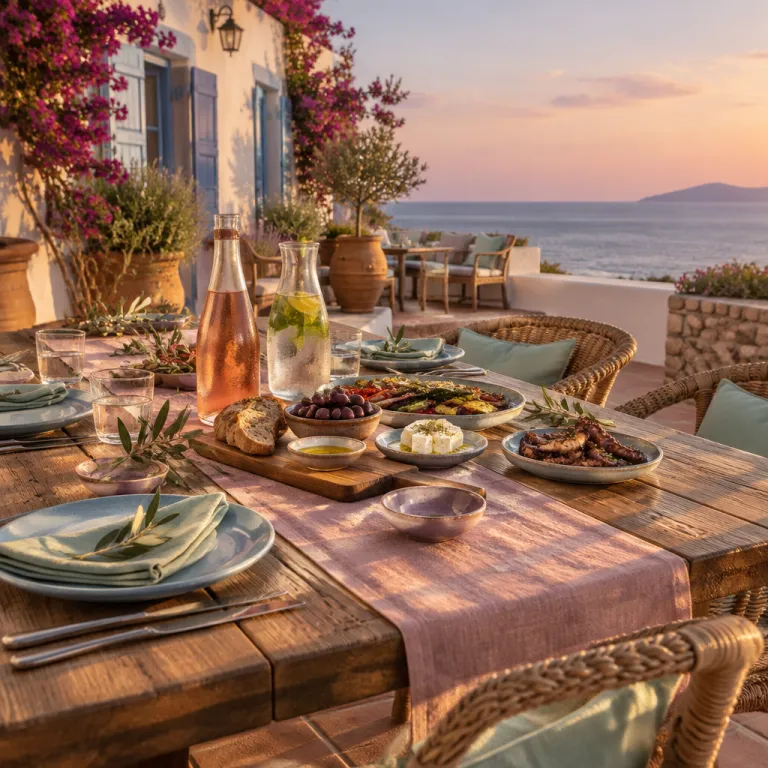
When the Greek taverna autumn mood replaces the summer rush
By late September the Greek taverna autumn rhythm settles in quietly, especially in places like Nafplio, Chania and Naxos Town. The tables that once turned every ninety minutes now hold the same Greek food for hours, while owners lean on doorframes and talk about harvests and seasonal ingredients. In villages around Kalamata or on Paros, you might hear someone mention the first olive pressing dates at local mills such as the Andriotakis estate near Heraklion, or when the last grapes came in from the hillside. For luxury travelers used to precision timed tasting menus, this slower pace can feel like the most perfect upgrade of all.
In fall the regulars return and the room changes language and volume. You hear orders for traditional Greek bean soup, slow cooked lamb with potatoes and vegetables and trays of roasted pumpkin with garlic and olive oil, instead of laminated menus translated into five languages. A taverna owner in the Peloponnese might point out which pumpkin came from his cousin’s field or which village supplied the feta, the way the Dounias family does at their farm taverna in Drakona, Crete. The performance for passing crowds fades, and what remains is a family style ritual that lets you quietly taste Greece at its own speed.
Hotels that understand this shift will nudge you toward the right village, the right hour, the right table. A concierge who books a car at 13.30 rather than 20.30 knows that Greek taverna autumn lunches are where comfort foods and conversations stretch longest. They also know that the most comforting luxury is not another amenity, but the feeling that nobody needs your table back before the cinnamon cloves in your phyllo cake have cooled. In places like Crete or Epirus, staff often know exactly which seaside or mountain taverna still cooks the way their grandparents did, and which ones stay open daily from roughly 12.30 until early evening even after the charter flights stop.
The anatomy of a long autumn lunch by the sea or in the hills
A proper Greek taverna autumn lunch begins slowly, with nothing urgent. Someone sets down a Greek salad first, heavy with tomatoes, carrots, cucumbers, olives and thick slices of Greek cheeses that glisten under olive oil. On islands like Syros or in coastal Messinia, you might see local graviera or manouri instead of generic cheese. Then come small plates that feel like recipes Greek grandmothers would recognise instantly, each one built from simple ingredients and a quiet confidence in time.
You might start with chicken soup brightened by lemon, or a bean soup with carrots, celery and potatoes that tastes like pure fall in a bowl. In northern regions such as Zagori, this kind of soup often appears as soon as the evenings cool, usually after mid‑September. Next comes a procession of grilled pork, slow cooked lamb, or plant based plates of charred vegetables, all carrying that unmistakable taste Greece gets from wood smoke and sea air. Somewhere between courses, someone will suggest a slice of orange phyllo cake soaked in syrup, and suddenly the two hour mark feels like an opening chapter rather than an ending.
Autumn is also when pumpkin appears on more menus, sometimes roasted with pumpkin spice and cinnamon cloves, sometimes folded into comfort foods that sit beside lamb and chicken without apology. Luxury travelers who care about seasonal ingredients will find that this is the moment when recipes and stories merge, especially in regions where vineyards and olive groves sit just beyond the terrace. For a deeper sense of how this season shapes the table, read our guide to eating your way through a Greek autumn before you choose your base.
From tourist performance to local ritual at the autumn taverna
Once the charter flights thin out, the Greek taverna autumn personality becomes more honest. Staff who spent summer reciting menus in three languages now talk about which potatoes came from whose field and which lamb grazed on which hillside. In a village taverna above Kardamyli or in a backstreet of Chania’s old town, you might hear a cook explain that the lamb came from Sfakia or that the potatoes arrived that morning from a nearby plateau. The shift from performance to ritual is subtle, but you feel it in the way a second carafe of wine appears without anyone checking a table turn chart.
For travelers booking premium stays, the real luxury is access to these rooms when they are cooking for themselves, not for the algorithm. You will see family style trays of pork baked with potatoes and vegetables, chicken roasted with lemon and garlic, and phyllo cake made from recipes Greek families guard closely, rather than generic tourist platters. Even plant based guests are quietly looked after with grilled vegetables, bean soup and pumpkin dishes that feel comforting rather than compensatory. A Cretan owner might simply say, “Eat what we eat today,” and point to a tray of horta, beans and roasted squash, echoing the ethos described by the Hellenic National Tourism Organization when it highlights village tavernas as guardians of local foodways.
Choosing the right hotel helps you land in the right dining orbit, close to tavernas where the owners still eat at the last table. Our report on the Greek gastro taverna movement shows how some kitchens now balance chef technique with traditional Greek instincts, especially in autumn. The key is to ask for places where locals linger on weekday afternoons, because that is where you will truly taste Greece when the season exhales.
Ordering with the season: what belongs on your autumn table
Reading a menu during Greek taverna autumn is an exercise in restraint. The list of traditional dishes built around seasonal ingredients can feel endless, from slow cooked lamb with potatoes to pork stews thick with tomatoes, carrots and herbs. In regions like Macedonia or Thessaly, you may also see hearty casseroles that only appear after the grape harvest, often from late September into October. A good rule is to ask what the family is eating that day, then build your lunch around those same recipes.
Start with something light but comforting, perhaps a chicken soup with lemon or a bean soup with carrots, celery and plenty of olive oil. Add a Greek salad for freshness, then share plates of roasted vegetables, pumpkin baked with pumpkin spice and cinnamon cloves, or plant based casseroles that show how Greek food handles vegetables with real authority. Meat eaters should look for lamb baked in parchment, grilled pork chops, or chicken marinated in garlic and lemon, all of which pair beautifully with local wines from regions like Nemea, Naoussa or Santorini.
Leave space for something sweet, because autumn is when cake and phyllo desserts shine. An orange phyllo cake drenched in syrup feels like the perfect ending to a long lunch, especially when shared family style with coffee. If you want to align your hotel choice with this way of eating, look for properties that talk about local producers and seasonal menus rather than generic half board, and pair that with our guide to the Greek art of slow travel to structure your days around the table rather than the checklist.
Designing a luxury stay around the two hour lunch
Planning a premium trip around Greek taverna autumn lunches means rethinking your schedule. Instead of stacking activities from morning to evening, you anchor the day around a two hour meal that starts sometime after 13.00 and ends whenever the last cake crumb disappears. This is where the soft life trend meets traditional Greek hospitality, and where high end hotels can quietly excel. In destinations like Tinos, Sifnos or the Mani peninsula, this rhythm feels almost built into the landscape.
Choose properties that sit within walking distance of at least one serious taverna, ideally a place known for comfort foods like bean soup, slow cooked lamb and family style trays of potatoes and vegetables. Ask the concierge which spots stay open in fall and which owners still cook from their own recipes Greek families have used for decades, then build your itinerary around those names. A morning hike, a long lunch, and a late swim can feel more luxurious than any packed schedule, especially when the staff understand that you value time at the table as much as spa time.
Room service has its place, but in autumn the real room is the one with plastic chairs, paper tablecloths and the smell of garlic and olive oil drifting from the kitchen. Luxury here is the freedom to linger, to order another plate of pumpkin with cinnamon cloves, to share an orange phyllo cake without glancing at your watch. When you book with that priority in mind, you are not just reserving a room in Greece, you are reserving a seat in the season when the country finally eats at its own pace.
Frequently asked questions about Greek taverna autumn culture
How does a Greek taverna change in autumn compared with summer ?
In autumn many tavernas shift from tourist focused menus to traditional Greek cooking aimed at locals. You will see more seasonal ingredients like pumpkin, potatoes and vegetables and slow cooked lamb, and fewer generic grilled platters. In places such as Crete, the Peloponnese and northern Greece, menus often reflect the olive and grape harvests. The pace also slows, making it easier to enjoy a two hour lunch without pressure to vacate your table.
What should I order for a comforting autumn lunch in Greece ?
Look for comfort foods such as bean soup with carrots and celery, chicken soup with lemon, and trays of roasted vegetables dressed with olive oil and garlic. Meat eaters can add pork stews or lamb baked with potatoes, while plant based travelers will find plenty of pumpkin dishes and salads. In wine regions, ask which local bottle pairs best with your slow cooked dishes. Finish with a sweet like orange phyllo cake soaked in syrup for a perfect seasonal ending.
Can plant based travelers enjoy Greek taverna autumn menus ?
Yes, autumn is an excellent season for plant based travelers in Greece. Many tavernas serve recipes Greek families have long used, such as vegetable stews, bean soup, grilled seasonal vegetables and pumpkin baked with cinnamon cloves. In rural areas, you may also find wild greens, lentil dishes and tomato based casseroles that are naturally vegan. Always mention your preferences and staff will usually suggest several comforting options built around local produce.
How can I choose a hotel that fits this slow lunch culture ?
Prioritise hotels located near villages or coastal areas with respected tavernas that stay open in fall. Ask directly whether staff can recommend places known for family style lunches, seasonal ingredients and traditional Greek dishes rather than tourist menus. Properties that highlight local producers, Greek cheeses and regional recipes are usually best aligned with the two hour lunch rhythm. Many boutique hotels in wine or olive regions now mention these partnerships in their descriptions.
Is a long autumn lunch better in the islands or on the mainland ?
Both offer strong options, but the choice depends on your wider trip. Islands provide sea views and fresh fish alongside lamb, chicken and vegetables, while mainland regions often lean into hearty comfort foods like bean soup, pork stews and pumpkin dishes. Mountain villages in Epirus or Arcadia feel very different from Cycladic harbours, yet both celebrate the same Greek taverna autumn spirit. For a first experience of Greek taverna autumn culture, many travelers combine a few island days with a mainland village stay to taste Greece in both moods.